
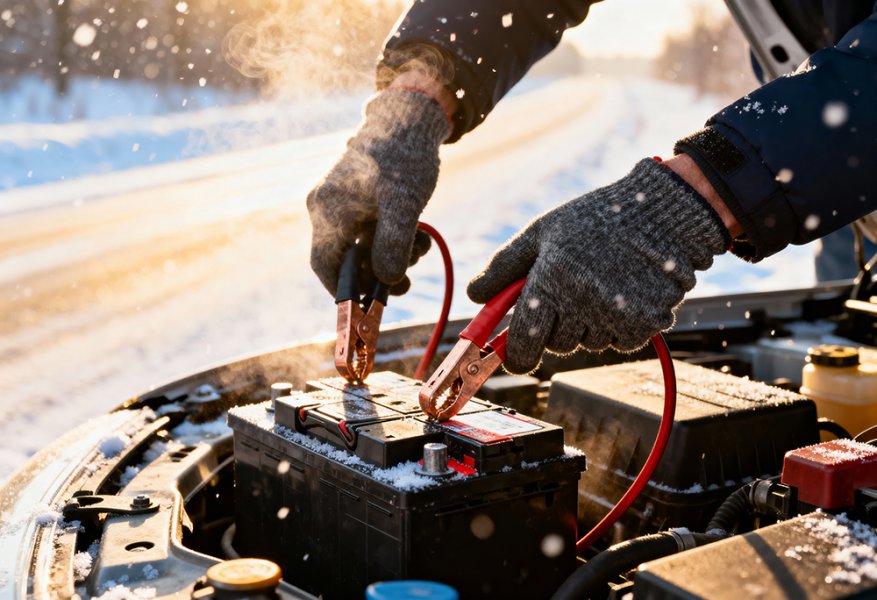
If your vehicle struggles to start during the winter, you are not alone. February is one of the most common months for battery failures, and it usually happens at the worst possible time when you are trying to get to work or start your day.
Cold weather places extra strain on your vehicle’s electrical system, and your battery takes the biggest hit.
Cold Weather Slows Battery Performance
Inside every car battery is a chemical reaction that produces electrical power. When temperatures drop, that chemical reaction slows down. At the same time, your engine requires more power to start because cold oil is thicker and harder to move.
This combination means your battery must work harder while producing less power.
Signs Your Battery May Be Failing
Many batteries give warning signs before they fail completely. Some common symptoms include:
- Slow engine crank when starting
- Clicking noise when turning the key
- Dim headlights
- Electrical systems acting weak
- Dashboard battery warning light
If you notice any of these symptoms, it is a good idea to have your battery tested before it leaves you stranded.
How Long Do Car Batteries Last?
Most car batteries last three to five years, depending on driving habits, climate, and vehicle electronics. Extreme temperatures, both hot and cold, can shorten battery life.
If your battery is approaching the three-year mark, testing it during the winter months is a smart preventative step.
A Quick Battery Test Can Prevent a Breakdown
A professional battery and charging system test only takes a few minutes and can tell you:
- Whether your battery is still strong
- If your alternator is charging properly
- If your starter is functioning correctly
Catching a weak battery early helps prevent unexpected breakdowns.
Do Not Wait Until Your Car Will Not Start
February weather can be unpredictable, and the last thing anyone wants is to be stuck with a vehicle that will not start in the cold.
A simple battery inspection can give you peace of mind and ensure your vehicle is ready for the rest of winter.
Key Takeaways for Drivers:
- Cold weather slows the chemical reaction inside car batteries.
- Engines require more power to start during cold temperatures.
- Slow cranking, clicking sounds, and dim headlights may signal a weak battery.
- Battery and charging system tests can prevent unexpected breakdowns.